
Written scope
Affected areas, removal plan, and timeline
Black Mold Removal Bradenton FL starts with a real inspection, not a sales pitch. We find where the moisture is coming from, contain the affected area, and remove the growth before it spreads through your walls, attic, or HVAC. From Downtown Bradenton condos to Village of the Arts bungalows, our team handles black mold cleanup Bradenton homeowners and landlords call about most.
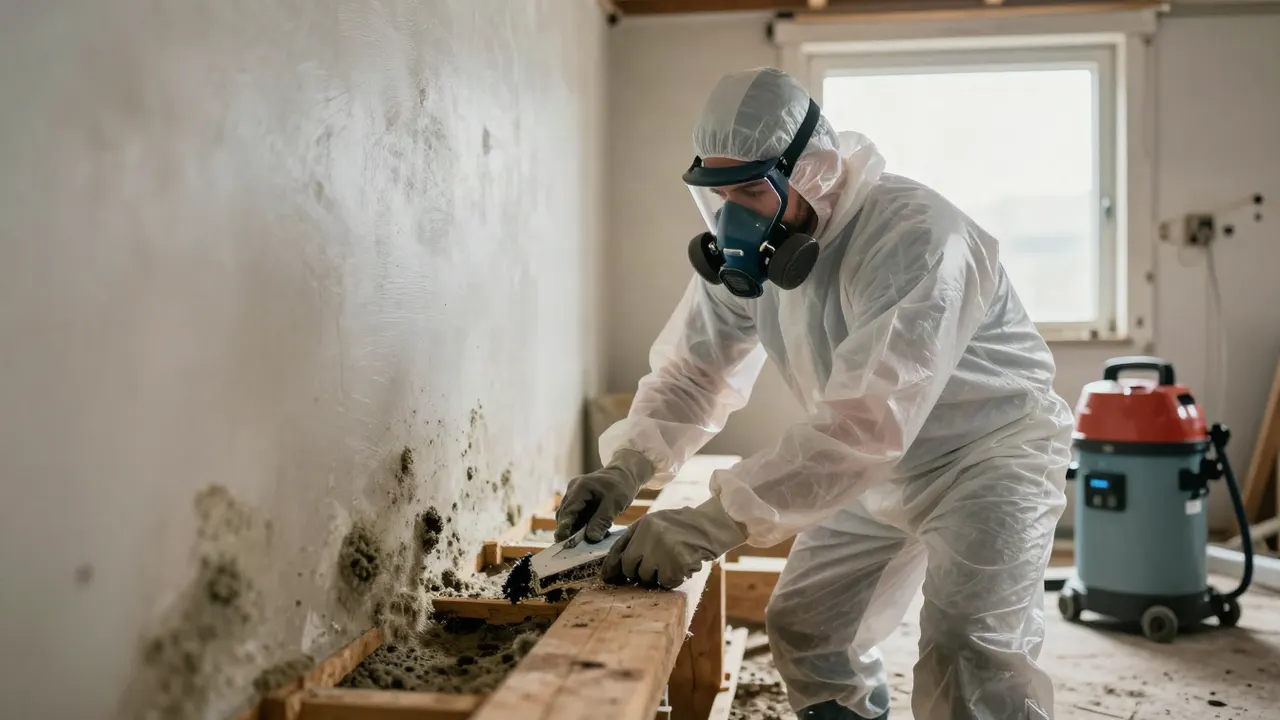
Every job includes inspection, containment, removal, drying, and clearance testing. Rebuild work like drywall and paint is quoted separately so you can see exactly what you are paying for. Here is what you get on a standard residential job.
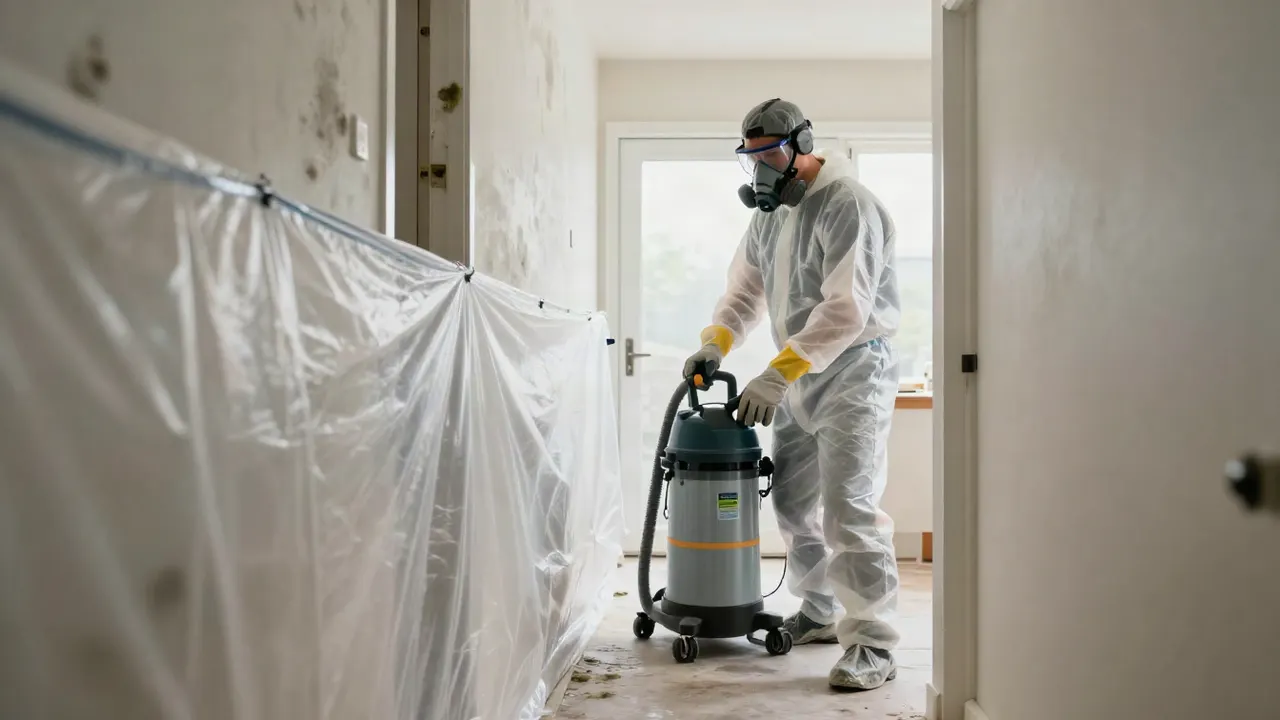
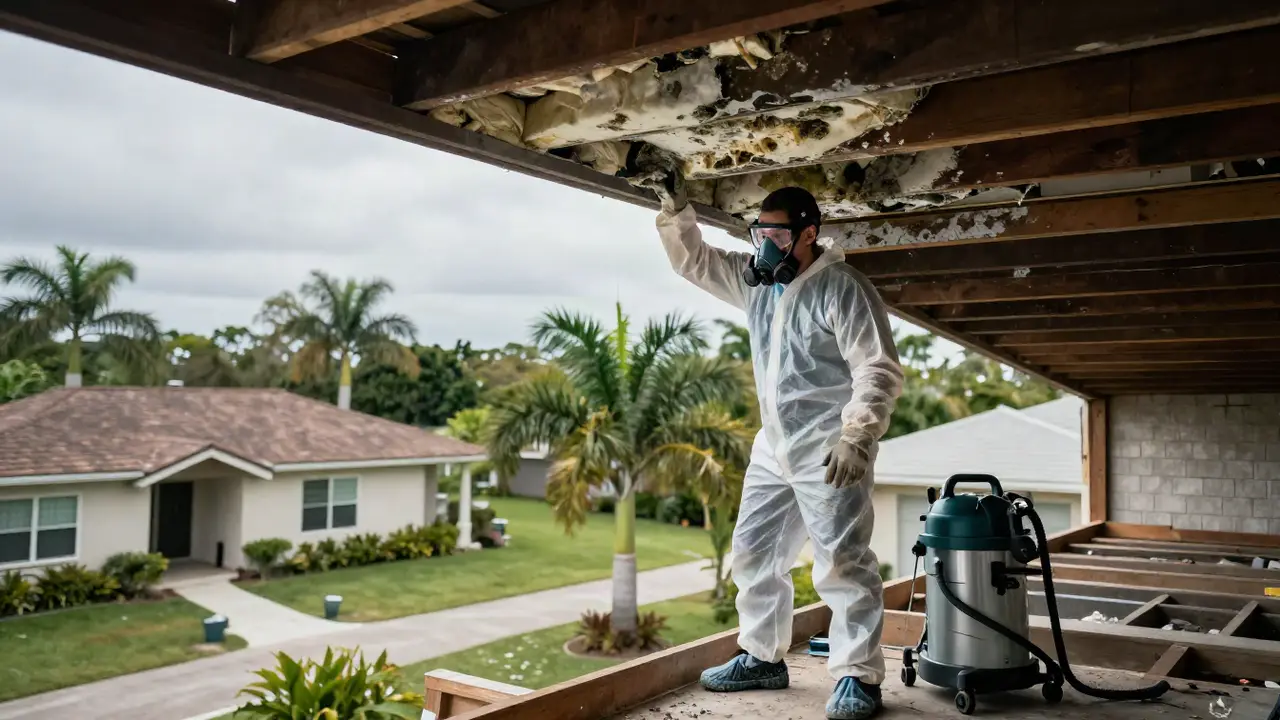
We handle mold in kitchens, bathrooms, attics, and closets for homeowners and tenants across Bradenton. Every job starts with a moisture inspection so we know exactly what we are removing.
We work with property managers, landlords, and business owners to clear mold without shutting down operations longer than necessary. Containment and scheduling are planned around your hours.
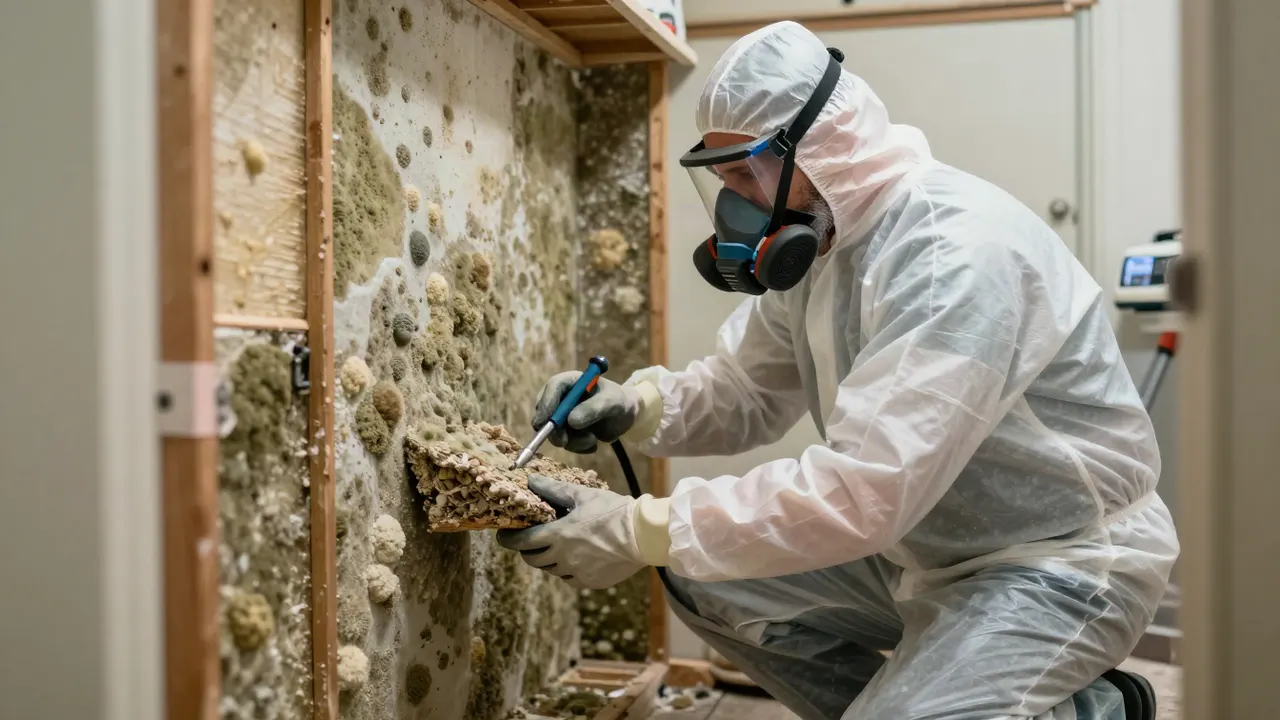
Black mold removal is the contained physical removal of mold growth and the mold-damaged material it feeds on, followed by drying and verification that the problem does not come back. It is not a spray-and-wipe job. We set up plastic sheeting and negative air machines, run HEPA vacuums and air scrubbers, then cut out drywall, insulation, or subfloor that has been colonized. A moisture meter and thermal imaging camera tell us how far the water traveled before anyone touches a wall.
In Bradenton, the trigger is almost always water: a slab leak under tile, a leaky roof after a summer storm, or HVAC condensation dripping into a closet for weeks. Humidity sits above 70 percent for months, so anything wet stays wet. That is why toxic mold removal Bradenton FL homeowners schedule in August is often an attic or air-handler problem, not a bathroom problem. We treat the water source and the mold together, because fixing one without the other means a callback in six months.
We find the water source first, because mold removal without that step is temporary.
Every job follows the same five steps, whether it is a 20-square-foot bathroom corner or a full attic. You get a written scope, a start time, and a completion date before we begin.
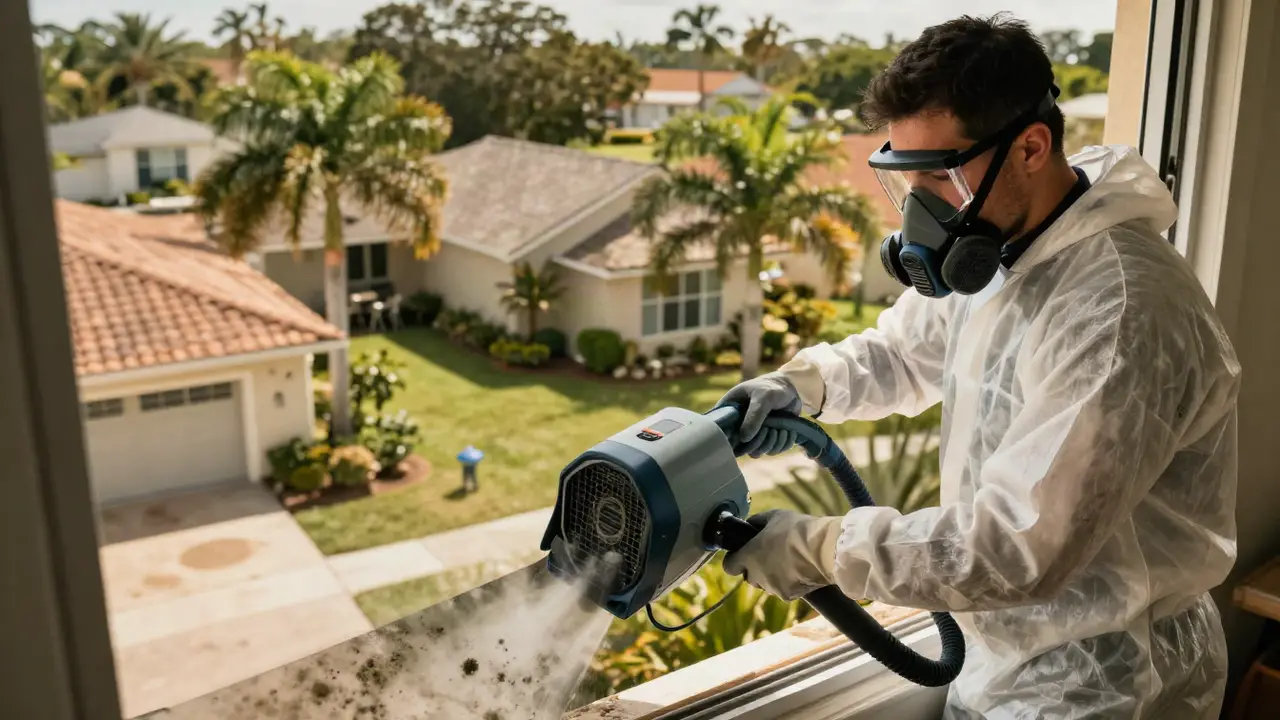
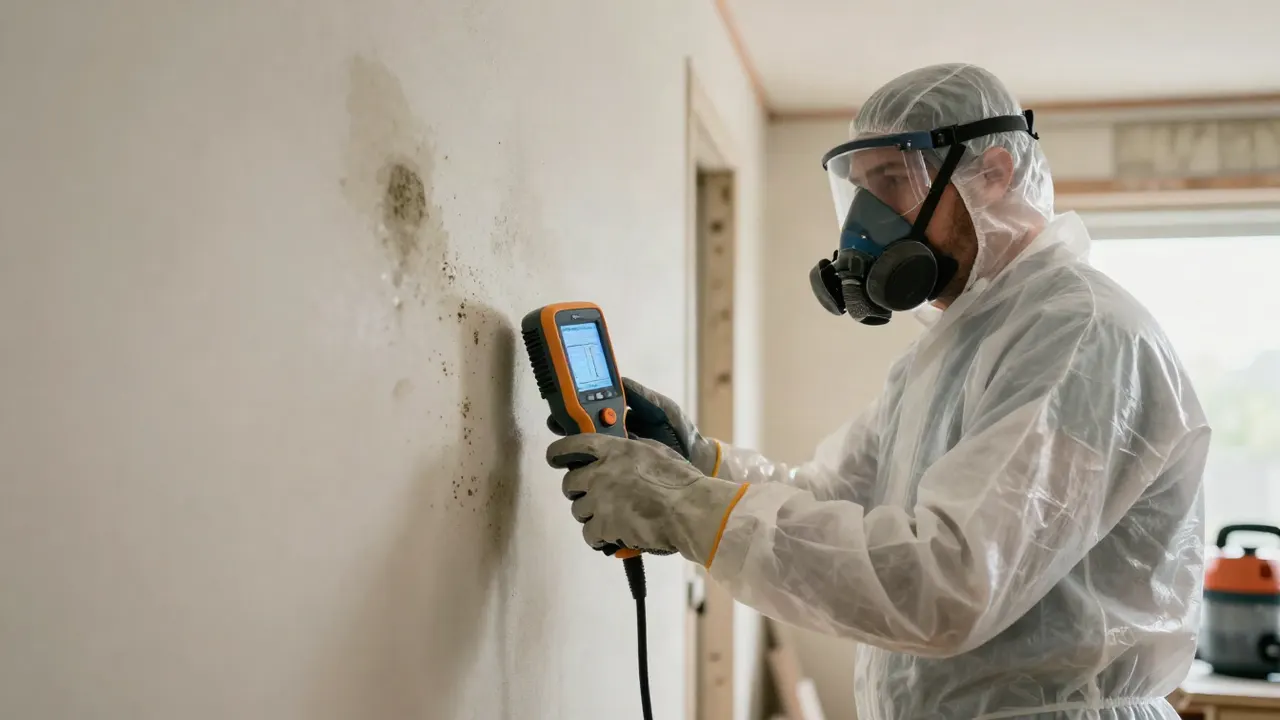
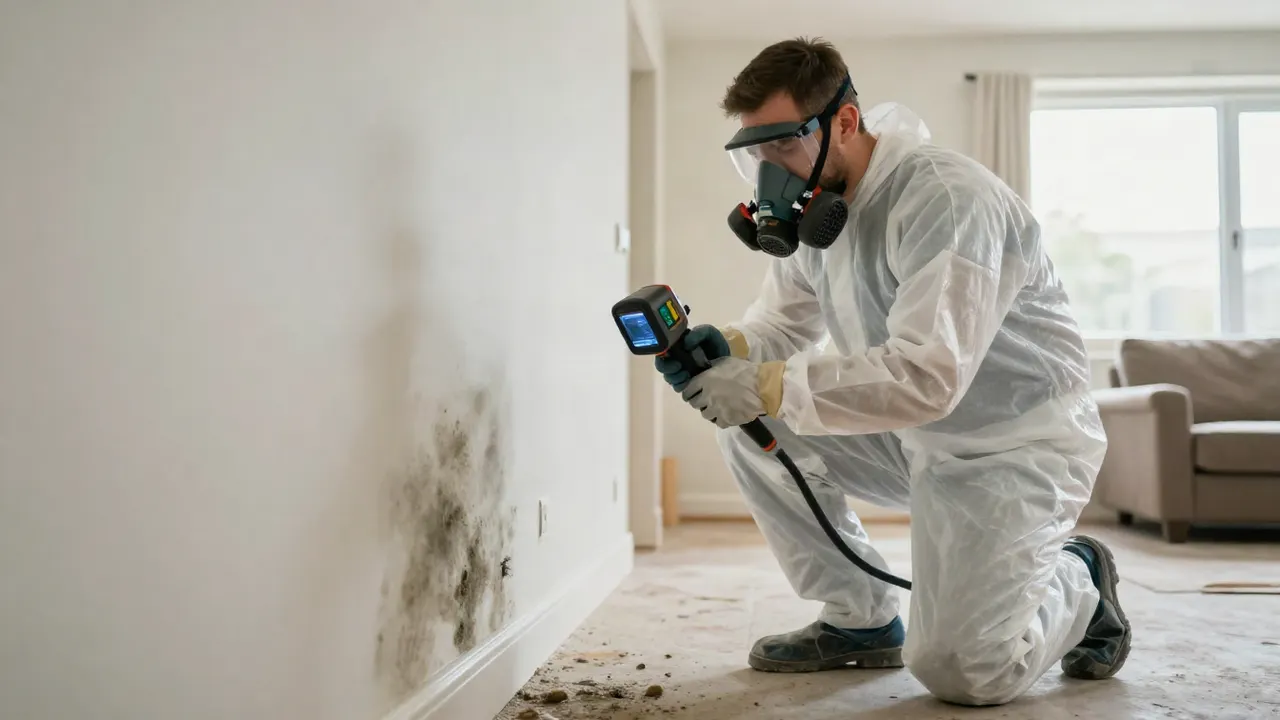
We walk the property with a moisture meter, thermal imaging camera, and boroscope to find hidden growth behind walls and under floors. Air and surface samples go to a third-party lab when you want confirmation of species. This usually takes 60 to 90 minutes, and you get the findings the same day.
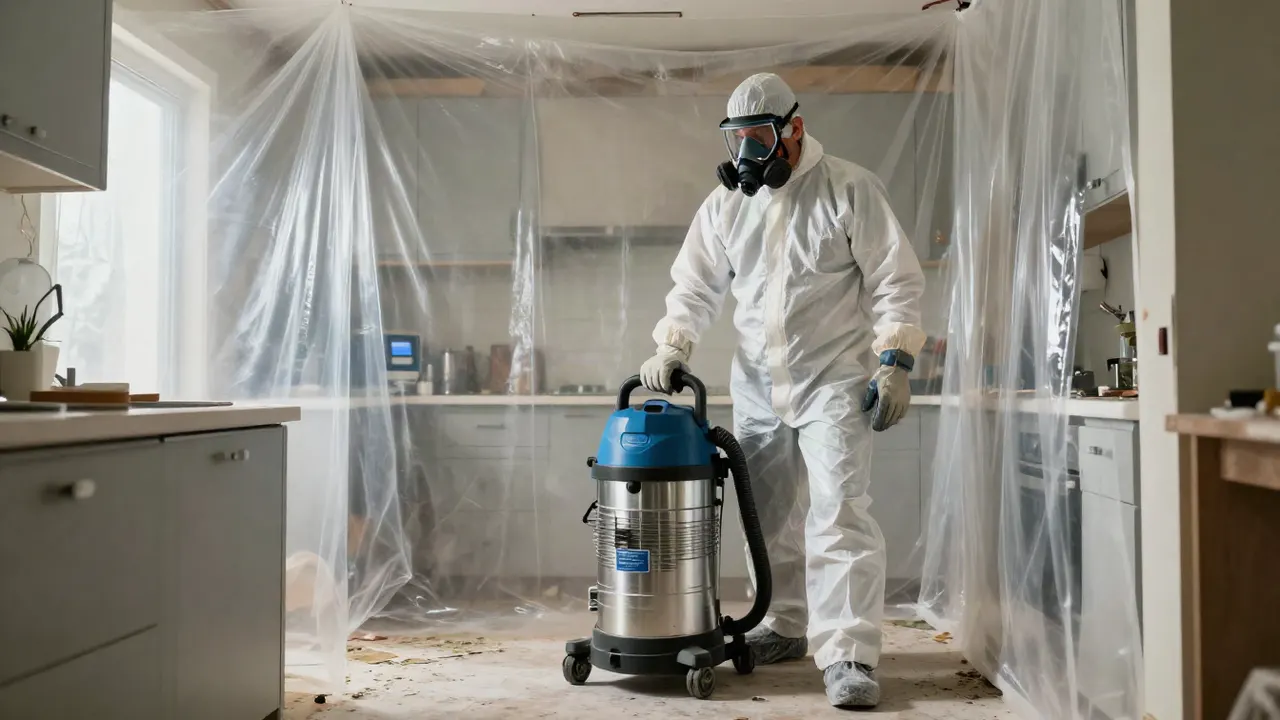
We seal off the work zone with 6-mil plastic sheeting and duct tape, then install a negative air machine so the room stays under pressure. That keeps spores from drifting into the rest of your home. Setup takes two to four hours depending on how many rooms are affected.
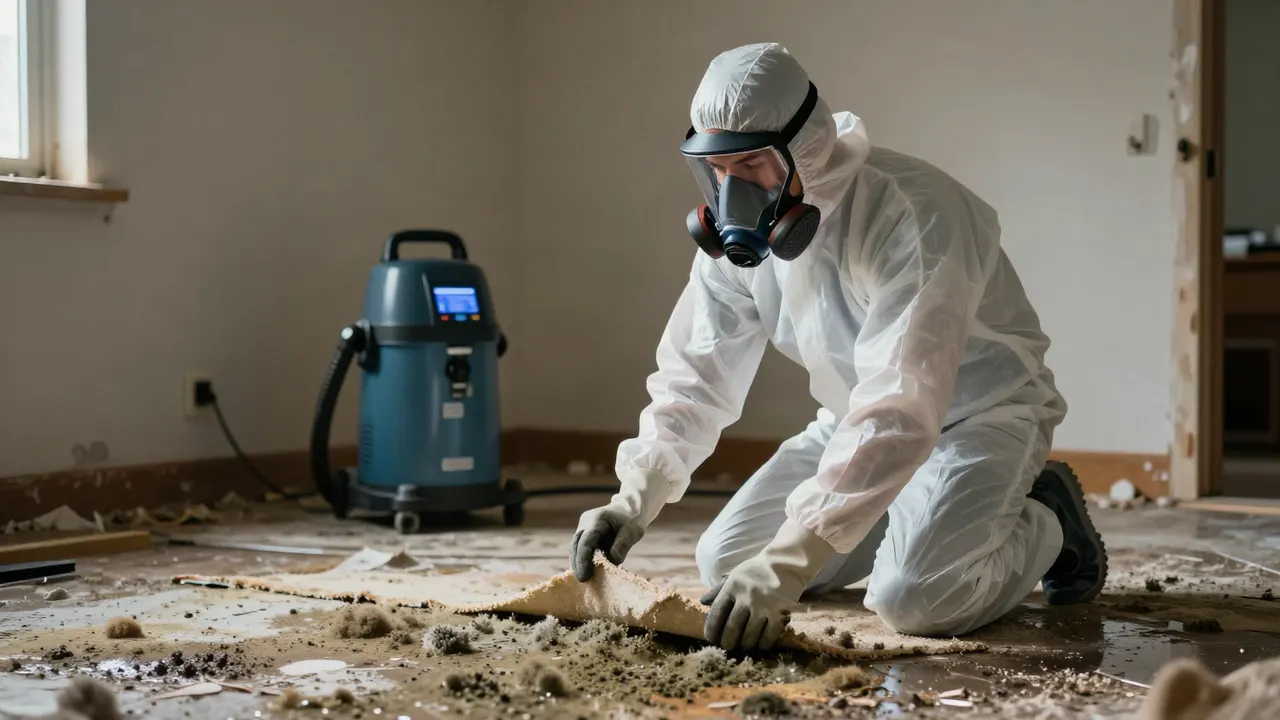
Colonized drywall, insulation, and trim come out and go into sealed bags. We HEPA vacuum every exposed surface, then apply an antimicrobial spray to the framing. Most residential jobs take one to three days of active removal work.
Dri-Eaz dehumidifiers and Phoenix Restoration air movers run until moisture readings match dry-standard baselines. We then apply a mold remediation encapsulant to seal porous framing. Drying typically runs 24 to 72 hours, and we check readings daily.
A third-party clearance test confirms the area is clean before we close it up. Then we replace drywall, insulation, and trim so the room looks finished, not patched. Clearance results and a final photo report go to you in writing.
Detects temperature differences behind walls and ceilings to locate hidden moisture without demolition. We use it on every inspection to map how far water traveled.
Reads moisture content in drywall, wood, and framing. We record readings before, during, and after drying to confirm the structure is back to dry-standard baselines.
Keeps the contained work zone under negative pressure so spores cannot escape into clean rooms. It runs continuously from setup to final cleaning.
Captures airborne spores and fine debris during and after removal. HEPA filters trap particles down to 0.3 microns, which is smaller than most mold spores.
Pulls moisture out of the air and moves it across wet surfaces to speed drying. We run them until moisture readings confirm the framing is dry.
A small camera on a flexible rod that lets us see inside wall cavities and ductwork without cutting large openings. It confirms hidden growth before we commit to a removal plan.
The industry standard for mold remediation that defines containment, removal, and clearance procedures. We follow it on every job, which is why our clearance tests pass on the first attempt.
We build plastic sheeting barriers and establish negative air pressure before any removal starts. This step is what keeps spores from spreading to unaffected rooms during the job.
We inspect with a moisture meter and thermal camera, contain the affected wall, remove colonized drywall and insulation, dry the framing with Dri-Eaz dehumidifiers, and treat with antimicrobial spray. The wall cavity reads dry, the musty smell is gone, and clearance testing confirms the area is clean before the drywall goes back up.
We set up containment in the attic, remove the colonized decking and insulation, HEPA vacuum the rafters, and apply a mold remediation encapsulant to seal the remaining wood. The attic is clean and sealed, and the roof repair can proceed without mold spreading into the living space below.
We contain the closet, remove the colonized insulation and drywall, clean the unit housing, and treat the framing. We also identify the condensate drain issue that caused the moisture. The closet is dry and clean, the HVAC is running without spreading spores, and the owner has a photo report for the HOA.
We inspect the full unit, contain the bathroom, remove colonized drywall, dry the framing, and run clearance testing. We also check the rest of the unit for hidden growth. The unit passes clearance, the landlord gets documentation for the file, and the property is ready to re-list within a week.
Bradenton sits at 70 to 90 percent humidity for most of the year, and that is the single biggest reason mold calls spike here. Add afternoon thunderstorms from June through September, older slab-on-grade homes in ZIP 34205 and 34208, and HVAC systems that run almost year-round, and you have perfect conditions for hidden growth. Most of the black mold removal services Bradenton homeowners call about start with a roof leak, a slab leak, or an air handler that has been dripping into a closet for weeks. We adjust our drying schedules for Florida humidity, running dehumidifiers longer than a crew would in a drier climate, and we check moisture readings daily instead of every other day. If you need emergency black mold cleanup Bradenton FL after a storm, we prioritize those calls because the first 48 hours decide how far the mold spreads. Older homes near the Manatee River sometimes have lead paint under the drywall, so we follow EPA Lead-Safe practices when we open walls.
A slab leak under the kitchen tile soaked the baseboards and the wall cavity behind the cabinets for roughly three weeks. Dark staining covered about 40 square feet of drywall, and the musty smell had spread into the living room.
We contained the kitchen, removed 40 square feet of colonized drywall and insulation, dried the framing with Dri-Eaz dehumidifiers for 48 hours, and treated the studs with antimicrobial spray. Clearance testing came back clean on the first attempt.
We recommended checking the slab leak repair annually and running a dehumidifier in the kitchen during the summer months to keep humidity below 60 percent.
A summer storm pushed water under the roof shingles, and three weeks later the attic decking showed dark staining across a 200-square-foot section. The insulation had absorbed moisture and was holding it against the wood.
We set up containment in the attic, removed the colonized decking and insulation, HEPA vacuumed the rafters, and applied a mold remediation encapsulant to seal the remaining wood. The roof repair was completed the following week.
We recommended an annual attic inspection before storm season and confirming the roof flashing is sealed after any repair work.
The condensate drain on a downtown Bradenton condo air handler clogged and dripped into the closet for weeks. Dark growth covered the insulation and the lower section of drywall, and the musty smell was noticeable from the hallway.
We contained the closet, removed the colonized insulation and drywall, cleaned the unit housing with HEPA filtration, and treated the framing. The condensate drain was cleared and tested before we closed the closet back up.
We recommended flushing the condensate drain every six months and checking the closet for moisture after any extended AC run during the summer.
Most mold calls start with a smell, a stain, or a water event that was never fully dried. Here are the problems we run into most often in Bradenton and how we handle them.
We use a thermal imaging camera and boroscope to find the source without tearing out walls blindly. Once we locate the colony, we contain the area, remove the affected material, and dry the cavity so the smell does not come back. Hidden growth behind walls or under floors keeps releasing spores into your air, and the smell gets worse every week you wait.
We inspect the attic and ceiling assembly, remove colonized decking and insulation, treat the rafters with antimicrobial spray, and run dehumidifiers until the framing is dry. Clearance testing confirms the area is clean before we close it up. Water that sat in the attic or ceiling cavity for more than 48 hours usually means colonized decking and insulation that has to come out.
We contain the air handler closet, remove colonized insulation and drywall, clean the unit housing with HEPA filtration, and treat the framing. We also flag the condensation or drainage issue that caused it so it does not repeat. The system pulls spores through the ducts and spreads them to every room, so a small closet problem becomes a whole-house air quality issue.
We handle removal, drying, and clearance testing, then give you a written report with photos for your records. That documentation lets you re-list the unit with proof the mold problem was properly remediated. The unit sits vacant, the smell gets worse, and you cannot re-lease it until the mold is documented as resolved.
Mold spores travel through your HVAC and settle in bedrooms, kitchens, and living rooms. We remove the colony and scrub the air with HEPA filtration, so the spore count in your home drops instead of recirculating. Most customers notice the musty smell is gone within 24 hours of the final cleaning.
Black mold can colonize a wet wall cavity in 24 to 48 hours. Our crews contain the area with plastic sheeting and negative air pressure before removal starts, so spores do not migrate into clean rooms. That containment step is what separates a proper black mold cleanup Bradenton job from a handyman wipe-down.
Mold eats drywall paper, insulation, and wood framing. Left alone, it turns a $600 repair into a $6,000 rebuild. We remove only what is colonized, dry the framing, and treat it with an antimicrobial spray so the structure stays sound and your repair bill stays predictable.
We photograph moisture readings, thermal images, and affected square footage before, during, and after the job. That documentation is what your adjuster needs to process a water damage claim. It also gives you a written record if you sell the home and the buyer asks about prior mold work.
Clear records you can keep and share.
Affected areas, removal plan, and timeline
Before, during, and after documentation
Third-party lab report sent directly to you
Not every dark stain is black mold, and not every mold problem needs the same scope. Knowing the difference helps you ask the right questions before you commit.
Dark staining can be mildew or dirt, not Stachybotrys. Lab testing confirms the species. Without testing, you are guessing at the scope.
Mold needs a water source to colonize. If the leak is still active, removal will not last. We find and flag the source on every inspection.
Disturbing mold without containment spreads spores through your home. Plastic sheeting and negative air pressure keep the rest of your space clean during removal.
Outside these areas? Call and ask, we may still be able to help. 123456789
Most residential jobs in Bradenton run $1,200 to $4,500 in 2026, depending on square footage and how deep the growth goes. A small bathroom corner might be $1,200 to $1,800. A full attic with HVAC contamination often lands between $3,500 and $7,000. Inspection and lab testing are separate and usually cost $250 to $500.
The removal itself is safe when it is done with containment and HEPA filtration. The danger is in disturbing mold without protection, which releases spores into the air you breathe. Our crews wear respirators and Tyvek suits, and we keep the work zone under negative pressure so your family stays out of the exposure path.
A typical residential job takes two to five days from containment to clearance. Removal work is usually one to three days, then drying runs 24 to 72 hours, and clearance testing adds another day. Larger attic or commercial jobs can run seven to ten days. We give you a completion date in writing before we start.
Yes. If you have active water intrusion and visible mold, call us and we will schedule the soonest available slot, often the same day. We prioritize properties with ongoing leaks, sewage backups, or storm damage. Getting containment up fast is what limits how far the mold spreads through your home.
If you can see mold or smell it, the clock is running. Call us for a same-day inspection, a written scope, and a start date you can count on. We answer the phone and we show up when we say we will.
Call us any time, day or night. For active leaks and storm damage we dispatch emergency crews right away. For non-urgent mold issues, we schedule same-day or next-morning inspections across Bradenton and Manatee County.